
How My Front Yard Became a Tiny Native Plant Classroom
My front yard started as just that: a front yard. I wanted to grow more native plants, support pollinators and make the space a little more useful for the birds, insects and other wildlife already living around us. Over time, though, it became something else too. It became a place where neighbors stopped.
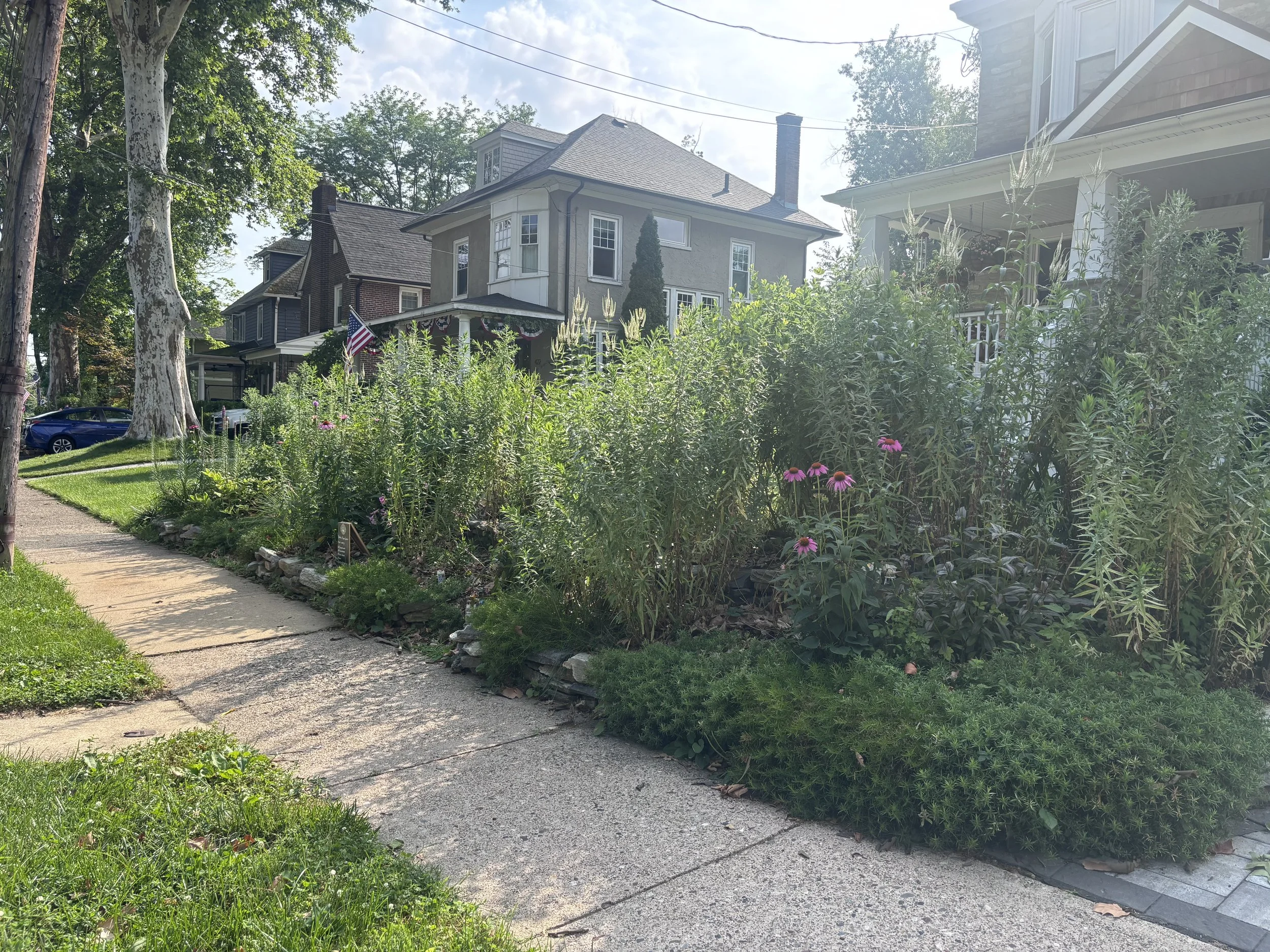
Children began searching for caterpillars, families paused to watch bees working the mountain mint. People asked about unfamiliar plants, took stickers from the Little Free Library and wrote down the insects they had spotted in the garden. Without really planning it, I had created a very small, slightly chaotic, outdoor classroom.
That feels fitting for The Mediocre Gardener, a project built around the belief that gardening does not have to be perfect, polished or intimidating to matter. You do not need to replace your entire lawn, memorize a native plant encyclopedia or become an expert overnight. You can begin with one plant—and learn what that plant makes possible.
Four easier ways to understand native plants
One of the biggest challenges with native plant gardening is that there is simply so much to learn. There are botanical names, growing conditions, bloom times, soil preferences, host-plant relationships and complicated food webs. All of that information is important, but it can also make the starting line feel very far away. I wanted to create a simpler entrance.
That led to four icons and phrases:
Pollinator Pit Stop
A plant that provides nectar or pollen for bees, butterflies, moths, hummingbirds, beetles, flies and other pollinators.
Caterpillar Café
A host plant that feeds the caterpillars of butterflies and moths.
Bird Buffet
A plant that supports birds through seeds, berries, shelter, insects or caterpillars.
Stormwater Sponge
A plant that helps absorb rainwater and slow runoff, particularly in wetter parts of a garden.
The phrases are not meant to explain everything about a plant, they are meant to give people a reason to care about it. Want to attract more pollinators? Begin with a Pollinator Pit Stop. Want to support butterflies through their whole life cycle, rather than only feeding the adults? Add a Caterpillar Café. Have an area where water regularly collects? A Stormwater Sponge might be more helpful than another round of fighting the puddle.
The point is not to redesign the whole yard in one ambitious weekend, it is to make one more thoughtful choice.
The children understood it first
The icons now appear throughout my front garden on small educational signs. They help connect the plants to the activity happening around them: bees on the mountain mint, caterpillars eating milkweed, birds visiting seed heads and deep roots helping the soil take in rain.
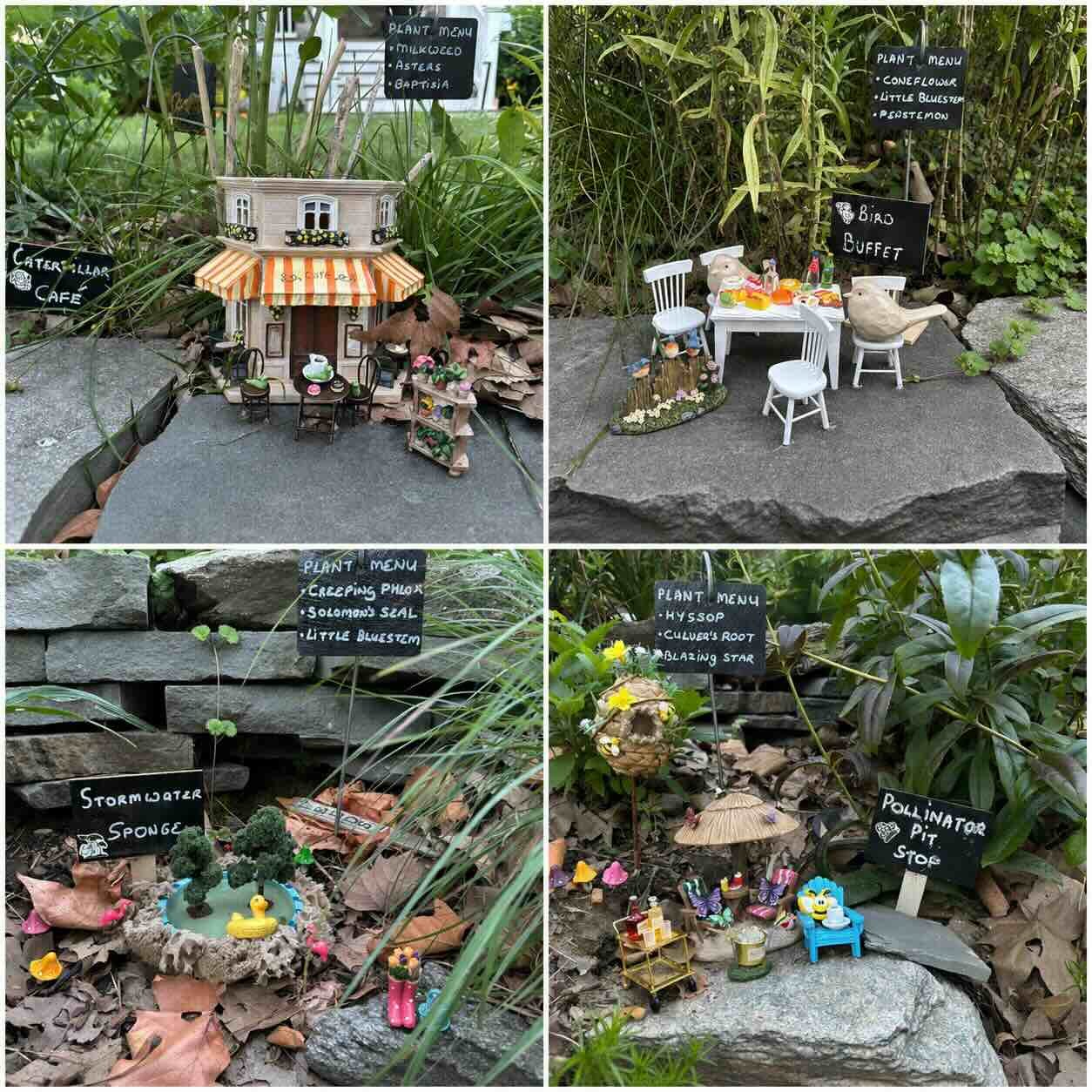
Small signs throughout the front yard help visitors connect native plants with the jobs they perform for wildlife and water.
Children seem to understand the idea almost instantly. One young neighbor recently skipped past the garden singing all four names:
“Pollinator Pit Stop, Bird Buffet, Stormwater Sponge, Caterpillar Café.”
That was one of those moments when I realized the language was doing exactly what I hoped it would do. Adults can sometimes make gardening very complicated, but children hear “Caterpillar Café” and immediately understand that this is where a caterpillar comes to eat. The garden has attracted visitors of nearly every age, from very young children hunting for insects to older neighbors who stop to ask questions or share what is growing in their own yards.
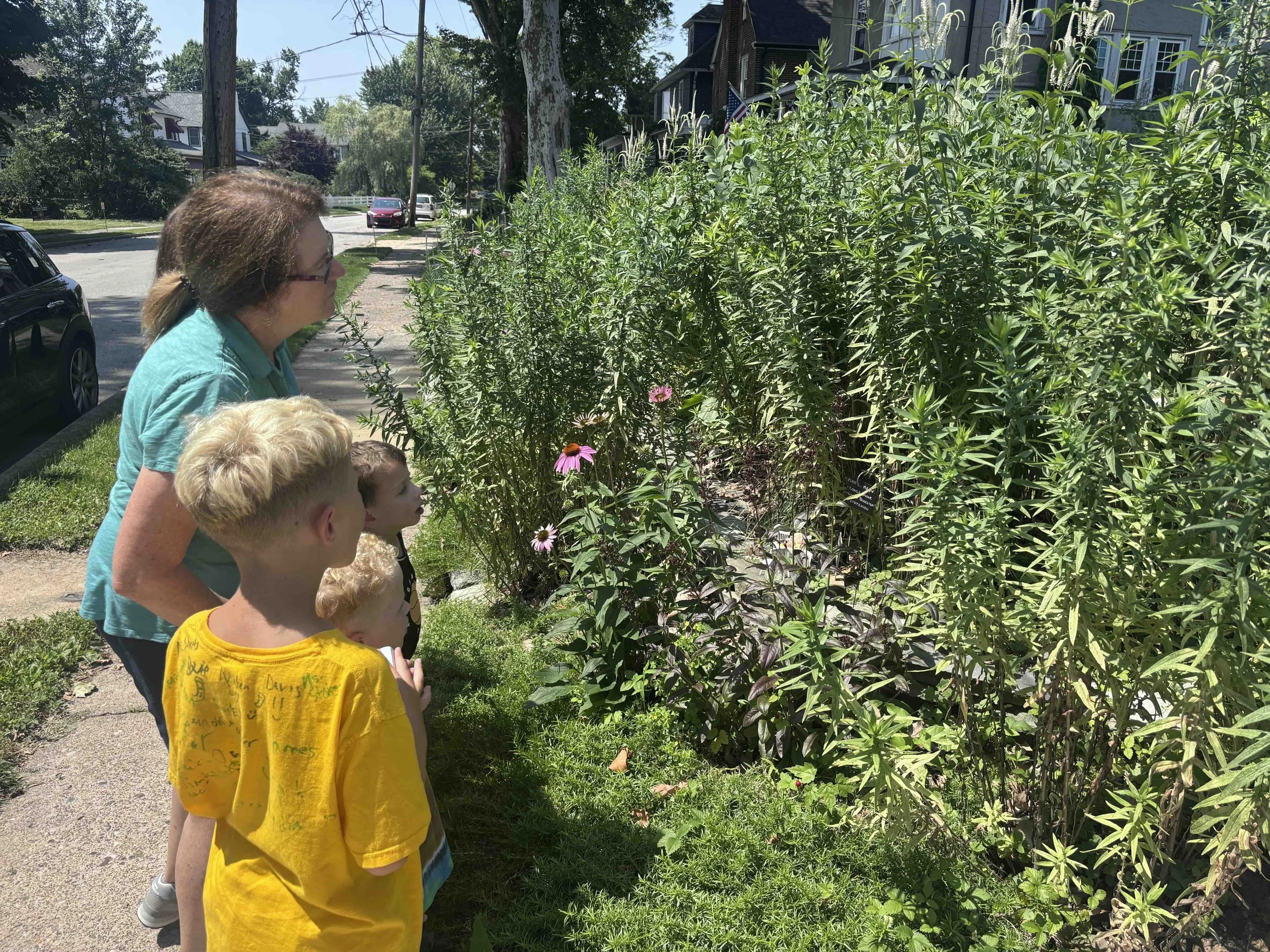
Neighbors regularly stop to search for insects, watch pollinators and add their discoveries to the garden logbook.
It is not a formal demonstration garden at all. There are weeds, plants are flopping over, things get eaten and some areas work better than others. But that may be part of why people feel comfortable exploring it.
The Little Free Library becomes part of the garden
The Little Free Library in front of the house has helped turn casual curiosity into participation. Alongside the books, visitors can find native plant guides, stickers and a garden logbook. Families can write down what they notice, whether it is a butterfly, bee, beetle, bird or an insect nobody can identify yet.
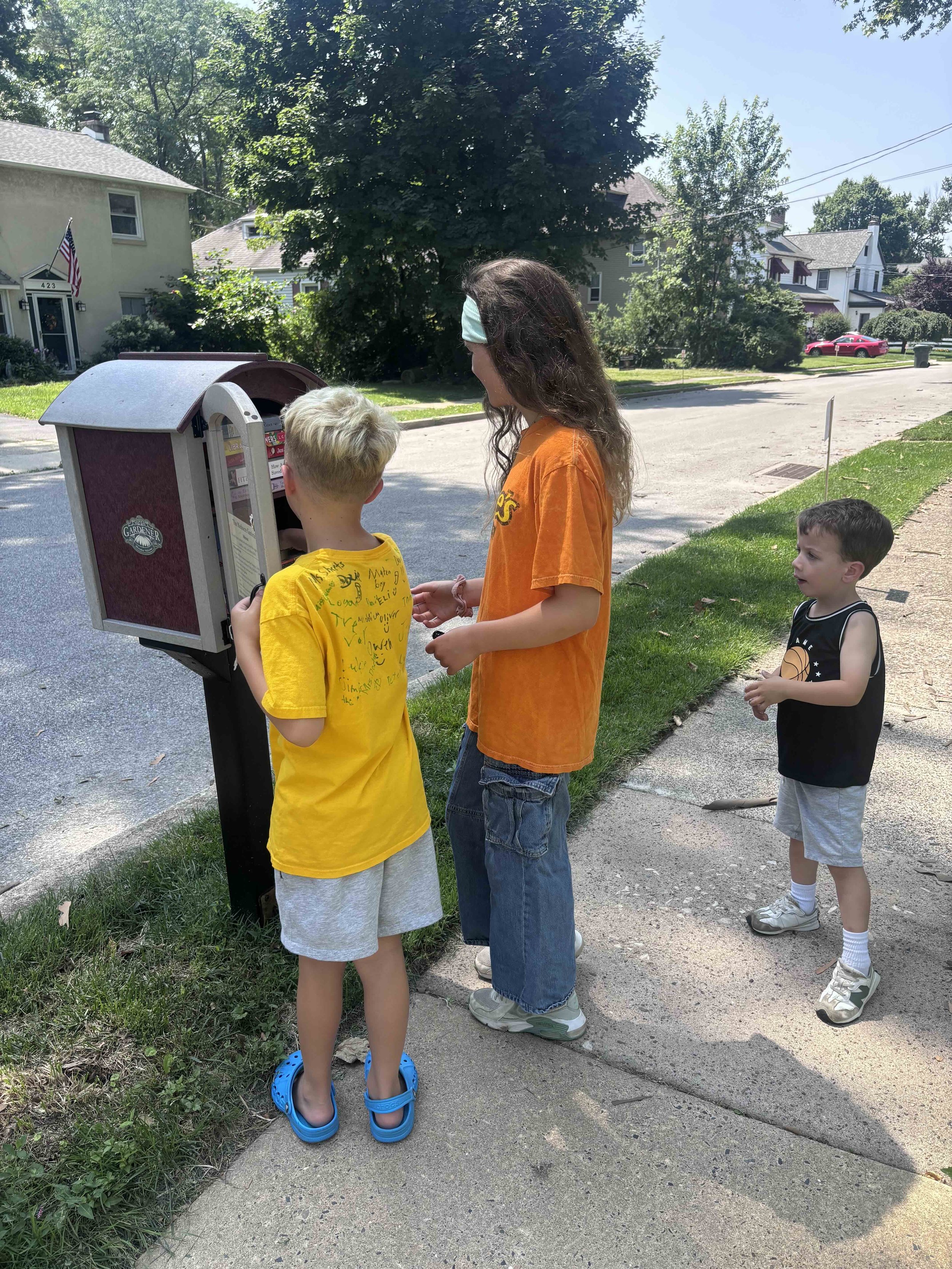
Checking out the insect log book, gardening books, insect stickers and more in the Little Free Library.
The logbook gives people permission to slow down and pay attention. For a long time, many of us were taught to judge a garden by how tidy it looked. Was it weeded? Was everything blooming? Was it neat, edged and under control? Native plant gardening invites a different set of questions. Who is visiting? What is eating the leaves? Where are the birds finding food? What happens when it rains? Is the garden providing something beyond decoration?
Taking the idea from the front yard to Primex
The next part of the experiment has been bringing the same language into Primex Garden Center. My front garden lets people see native plants functioning in a real home landscape and Primex gives them somewhere to take the next step.

The same four icons used in the front yard are now helping shoppers recognize useful native plants at Primex Garden Center.
The Mediocre Gardener signs and icons are now being tested around native plants at the Glenside garden center. They help shoppers recognize plants that can act as Pollinator Pit Stops, Bird Buffets, Stormwater Sponges or Caterpillar Cafés. That creates a practical little loop. Someone can walk past my garden, notice bees on a plant or read about what milkweed does, and then visit Primex to find a native plant that could provide a similar benefit at home. Primex has been an important partner because education only goes so far if people cannot easily find the plants afterward.
Small choices can begin to connect
One front yard will not solve habitat loss, declining insect populations or stormwater problems. But many small choices across a neighborhood can begin to create something meaningful. One household plants milkweed for monarch caterpillars. Another keeps its coneflower seed heads standing for birds. Someone puts cardinal flower or switchgrass into a wet corner instead of repeatedly trying to dry it out. Another neighbor adds flowers that bloom late in the season, when pollinators have fewer food sources available.
Each garden becomes one small stopping point. Eventually, those stopping points begin to form a network. That is the larger hope behind the project: not that everyone will suddenly become an expert native plant gardener, but that more people will understand that their yards can do something. They can feed, shelter, absorb water or connect one patch of habitat to another.
A neighborhood classroom that keeps changing
My front yard is still evolving, so are the signs, the plant guides and the work at Primex. Some ideas will work, others will need to change and that is part of the process.
For now, I love seeing people stop, look more closely and begin to recognize what the plants are doing. The garden is no longer simply a collection of flowers. It is a place where children search for insects, neighbors exchange ideas and people begin to imagine what might be possible in their own spaces. The bees, birds, caterpillars and butterflies are not waiting for us to create perfect gardens. They just need more of us to plant something useful.
